Ad leads get cold sitting in a queue with older purchased numbers.
What goes wrong
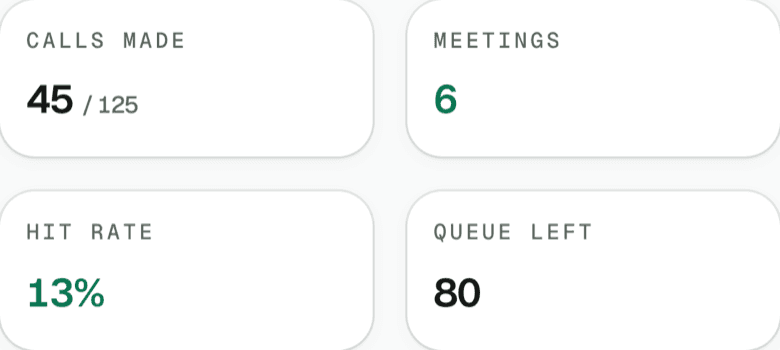
A customer fills the ad form on Friday evening. Your sales head sees it Monday morning, but by then the customer has asked three competitors for quotes. The window of interest closes before anyone at your company calls.
Ad leads and purchased lists share a single queue in order received. Fresh Meta leads sit behind ten days of purchased numbers. By the time someone dials on Tuesday, the customer has already moved on to the next possibility.
When a human telecaller books a site visit, they type a remark and hand it to someone in the office. That person re-opens the system, assigns the meeting to a salesperson, sends a confirmation to the customer. Two hours later the visit exists on a calendar.
Your best leads (the ones your own ad spend created) are dialled with the same priority as older purchased lists. The algorithm cannot tell them apart because they queue in the same way.
How it works
Fresh leads reach the top of the solar telecalling queue instantly
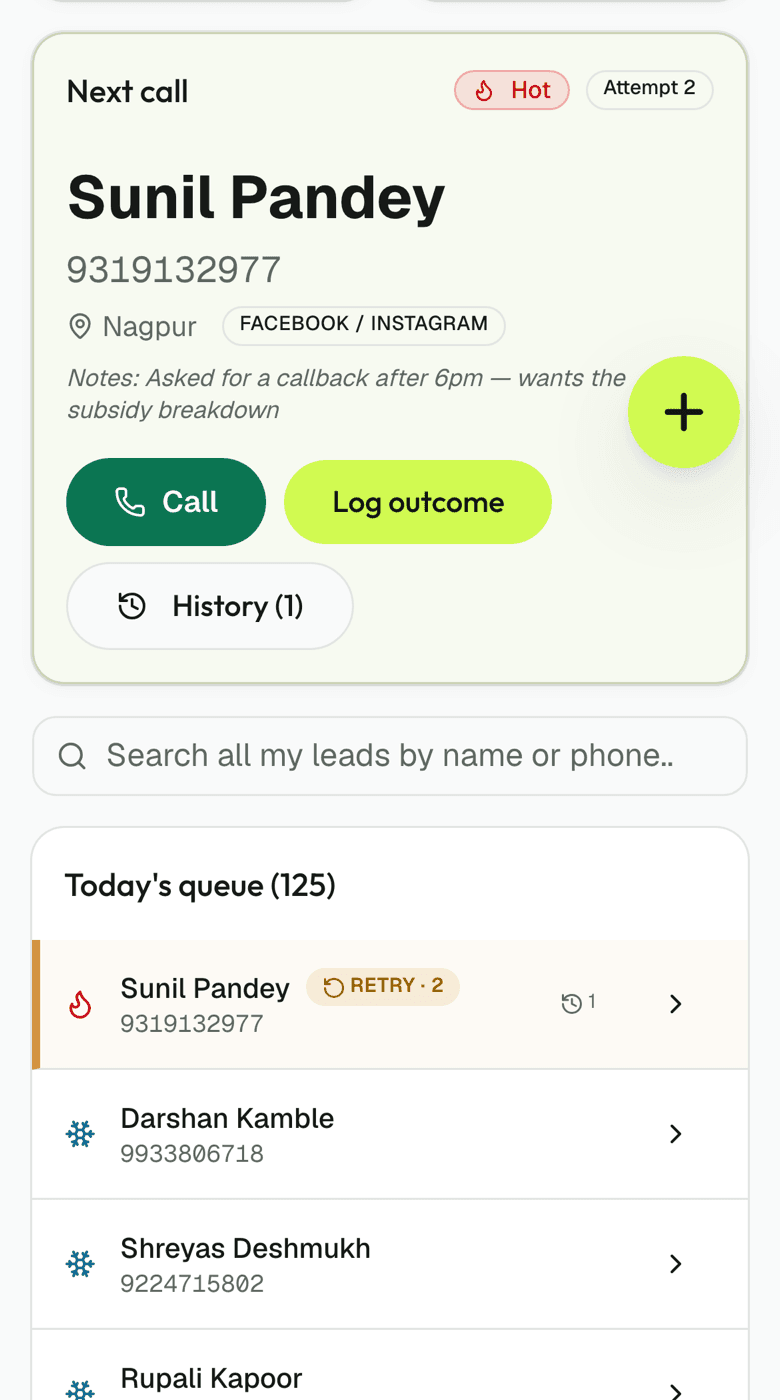
A Meta lead arrives in the system within five minutes: the sheet adds it, the PIN check marks it serviceable, that is all. When you enable the AI, Shreya sees hot leads ahead of older purchased numbers. The queue respects source priority at the moment of selection, not constantly, so fresh leads stay at the front without churn. Purchased lists stay below, so your humans still have work on the days Shreya is not calling or the queue runs thin.
Shreya dials during business hours, never outside
Between 9 am and 9 pm IST, Shreya selects one lead and dials it. A dropped call or no answer requeues the lead automatically: about ninety minutes later on the first miss, the next morning at 10:00 IST if a second same-day attempt also goes unanswered. The 09:00–21:00 window is enforced in two places — the database checks the IST hour before selecting a lead, and the vendor checks again when placing the actual call, so no call goes out at 22:00 because one layer slipped.
The AI qualifies the lead while the customer is on the line
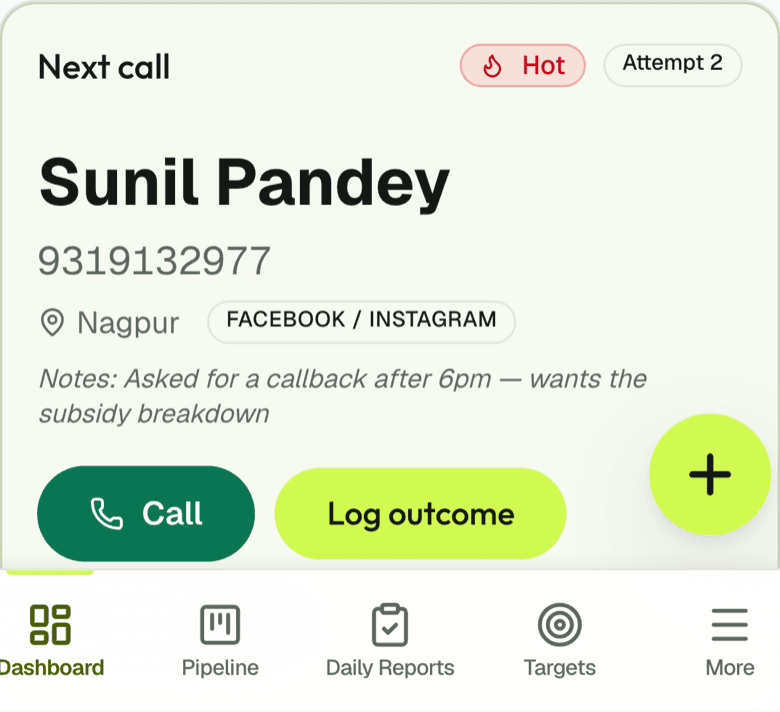
Shreya asks about roof access, whether solar is already installed, the customer's current electricity bill, and a preferred site-visit day. Nothing is written while the call is happening — the vendor holds the answers and runs its extraction once the call ends, then sends them back in the webhook. If a customer hesitates, repeats, or goes sideways, Shreya follows the thread rather than forcing a form; the summary and the outcome are what land in the queue for your team to read.
A booked meeting creates a deal, a task, and an assignment
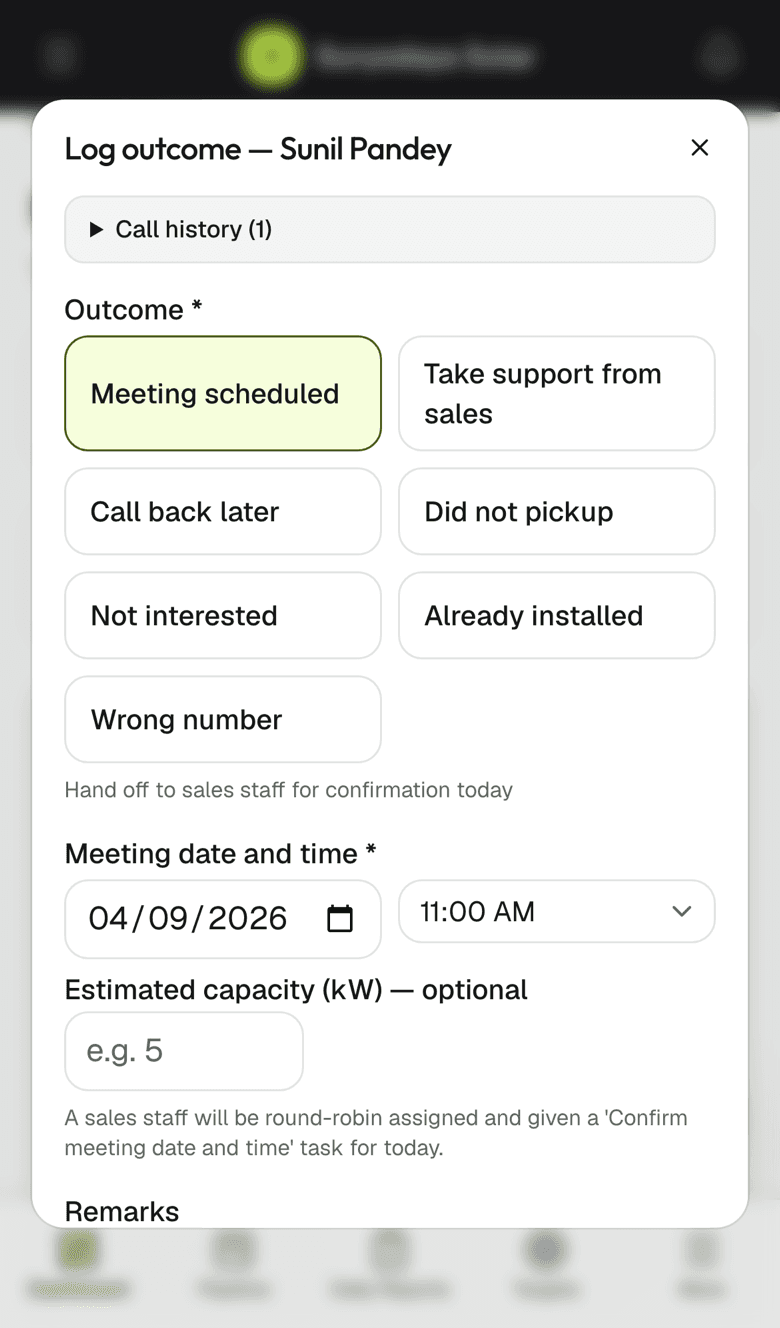
If the customer wants a visit, Shreya confirms the day and tells them a named salesperson will ring in the morning. The lead, the deal, and a follow-up task are written at that moment—through the same booking logic a human telecaller's outcome uses, so no desk person re-enters what the call already decided. The webhook that receives Shreya's analysis files the outcome and triggers the next dial automatically, so the chain never stops.
If something is unclear, Shreya logs a callback and tries again herself
Sometimes something is unclear mid-call — the roof is not visible from street level, a neighbour is outside, or the customer wants to check with family. Shreya tells them someone will call back and logs the call as a callback. The lead requeues automatically about ninety minutes later, and by default Shreya is the one who dials it again. A human telecaller can also open the same lead any time from the shared queue, with Shreya's remarks already on the record, and carry on from there instead of starting cold.
Everything else you would ask
Does the AI call outside my serviceable areas?
No. The PIN check happens before a lead enters the queue, so Shreya only dials numbers in your coverage map. If you expand or contract service areas, the queue respects it automatically on the next refresh—no manual curation needed.
What happens when a customer says no?
Shreya logs the reason: no roof access, already has solar, wrong number, or a plain not interested. A stated no marks the lead not interested and Shreya stops dialling it automatically — she only requeues a lead on a genuine no-answer, not on a refusal. A human telecaller can still reopen the lead later and try a different pitch; nothing on the record is deleted.
What if something comes up mid-call that the AI cannot handle?
Shreya is not built to resolve an edge case on the spot — a family member who needs convincing, a roof she cannot see, a question outside the script. Rather than guess, she logs the call as a callback and moves on, so a customer never gets stuck listening to the AI improvise. The lead stays visible in the shared queue the whole time, with her notes on it, for a human to step in whenever one is free.
How does the AI handle a callback the customer requests?
When a customer asks to be called back, Shreya logs it as a callback and the lead re-enters the queue about ninety minutes later for another attempt — it does not yet target the exact time the customer named. If the customer books on that later call, the lead, deal and task land the same way they would on a first call.
What if a call gets stuck or stops reporting back?
Shreya never has more than one call in flight at any moment. If a call does not report back within 15 minutes, the system assumes it will not and moves on to the next lead. The queue is always moving; nothing gets wedged.
Can I turn Shreya on and off?
Yes. A workspace needs an active AI telecaller configured as an employee. Disable it anytime and Shreya stops dialling, but the queue remains unchanged. Human telecallers can continue working through it, and you can re-enable Shreya later without losing anything.
Run one real project through it this month. You will know by the end of it.
30 days free, no card, no call. Then ₹10,000 a month for the whole company, however many people you put on it.